Table of Contents
Introduction
For years, digital strategy discussion in APAC have3 been framed as a debate between web vs app marketing. As mobile usage surged and super-apps become part of everyday life, many organization naturally shifted investment towards apps. Apps promised engagement, personalization, and long-term value.
Than thinking is not wrong. But it is incomplete.
From my experience working across MarTech platforms, analytics stacks, and customer journey design, one reality keeps resurfacing: apps are excellent at retention, but they are rarely where customer journeys truly begin. The web, often under-invested and underestimated, continues to play a decisive role in acquisition, education, and trust – especially in APAC.
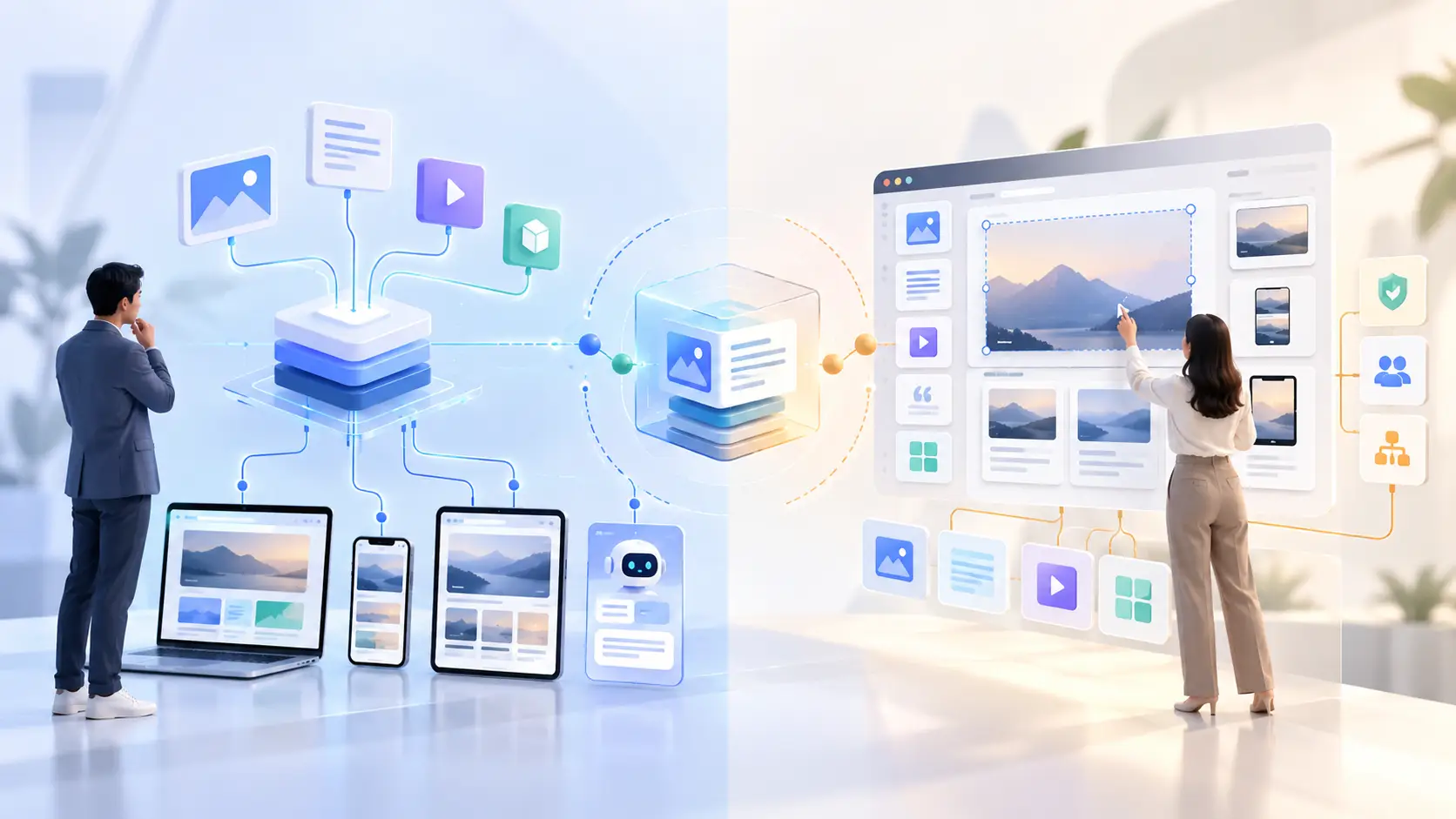
The issue is not choosing apps. The issue is treating web vs app marketing as a trade-off, rather than a system. In today’s environment, customers move fluidly across web, app, search, chat, and human support. They do not think in channels. They think in intent.
When teams design strategies around platforms, instead of intent, growth becomes expensive. Attribution become misleading. And valuable signals are lost before customers ever install an app.
This article explore why web still matters in an app-first world, how web-led acquisition and app-led retention reinforce each other, and why the most effective growth strategies in APAC are now deliberately omni-channel by design.
Web vs App Marketing: Why the Traditional Divide Still Matters
Before talking about convergence, it is important to acknowledge why the traditional model worked so well.
For many years, web vs app marketing followed a clear division of labor. The web handled discovery and education. Apps handled engagement and loyalty. Each channel played to its strengths.
The web is open by design. It is searchable, indexable, and accessible without commitment. Customers can explore, compare, and validate without friction. In APAC, where digital maturity, income levels, and trust vary widely, this openness is foundational.
Apps, by contrast, are designed for persistence. Once installed, they support personalization, notifications, saved preferences, and habitual usage. They are optimized for depth rather than reach.
This clarity simplified strategy. It helped teams allocate budgets, define KPIs, and structure MarTech stacks. In many organizations, it still works.
The challenge is that customer behaviour has evolved faster than organizational thinking.
Web for Customer Acquisition: Discoverability, Search, and First Intent
When customers encounter a need, their first instinct is rarely to open an app store. They search. They ask questions. They compare options. They look for reassurance.
This is where web vs app marketing becomes visible in practice.
Search engines, and increasingly AI-driven answer engines, remain the primary gateways to new demand. They surface content that explains, educates, and contextualizes. The web is where intent forms and matures.
In practice, I consistently see that the quality of pre-install web engagement shapes downstream outcomes. Customers who arrive at an app after meaningful web interactions convert better, churn less, and require less support.
The web does not just acquire users. It acquires prepared users.
App for Customer Retention: Engagement, Personalization, and Habbit
Once customers commit, apps shine.
App reduce friction. They remember preferences. They enable timely nudges. They support repeat behavior. This is why apps remain essential in any serious web vs app marketing strategy.
Problem arise when apps are expected to perform acquisition roles they were never designed for. That is when growth becomes fragile and expensive.
Why App-First Marketing Alone Is No Longer Enough
In many organizations, app-first thinking has quietly turned into app-only execution. This is the cracks appear.
Rising Acquisition Costs and the Limits of App Ecosystems
App ecosystems are closed by design. Discovery within app stores is limited, brand-led, and heavily influenced by paid placement.
As competition increases, the cost of acquiring users through app install campaigns continues to rise. Without a strong web foundation, growth becomes increasingly dependent on spend rather than insight.
From a web vs app marketing, perspective, this is a structural limitation, not a tactical one. Apps simply do not capture early-stage demand efficiently.
What App Analytics Miss Before the Install
App analytics are powerful – but only after users are inside the app.
Everything that happens before the install is often invisible or poorly attributed. This creates a distorted view of performance, where apps appear to “drive” outcomes that were actually shaped earlier through web interactions, search exposure, or content consumption.
When leadership teams rely only on app-centric metrics, they unintentionally undervalue the channels that made those installs viable in the first place.
How Customers Behave Today: The Rise of Omni-Channel Journeys
The most important shift in web vs app marketing is not technological. It is behavioral.
Customers today are genuinely omni-channel.
They move fluidly between web, app, search, chat social and human support. They start on one channel, pause, switch devices, return later, and complete elsewhere. They do not follow linear funnels.
This behavior breaks traditional attribution models and exposes the limits of channel-centric thinking.
Customers Don’t Think in Web or App, They Think in Intent
From a customer’s perspective, channels are irrelevant. What matters is progress.
- Can I understand this?
- Can I trust this?
- Is this right for me now?
Each of these questions maybe answered through a different channel. The web often plays a larger role than teams expect.
When organizations design web vs app marketing strategies without recognizing this intent-driven reality, friction builds quietly, until growth stalls.
Web Remains the Strongest Acquisition Channel in APAC
Despite the rise of apps and super-app ecosystems, the web remains the primary engine for acquisition across APAC.
Search continues to dominate discovery. As of 2025, Google accounts for over 90% of search market share across APAC, reinforcing the web’s central role in capturing demand at the moment intent forms (Source: Digital Marketing for Asia)
APAC is also undeniably mobile-centric. Approximately 59-64% of internet usage in Asia happens on mobile devices, spanning both mobile web and apps. This highlights an important nuance in the web vs app marketing debate: mobile-first does not automatically mean app-first. (Source: StatCounter)
At the same time, engagement patterns clearly favour apps. Consumers in APAC spend over five hours per day in mobile apps on average, with some markets exceeding six hours daily. (Source: MARKETECH APAC)
The table below summarizes the broader pattern.
Key APAC Digital Behavior Statistics
| Statistics | Value / Insight | Source |
|---|---|---|
| Google search market share in APAC | >90% | Digital Marketing for Asia |
| Mobile share of internet usage in Asia | ~59 – 64% | Statcounter |
| Average daily time spend in apps (APAC) | 5+ hours | MARKETECH |
| APAC mobile app install growth (2025) | +11% YoY | IT Brief |
| Day-1 retention for marketplace app | ~25% | eCommerceNews Asia |
| Share of mobile internet time spent in apps | ~90% | jmango360.com |
Taken together, the message is clear.
The web is where demand is captured. Apps are where value is retained.
APAC consumers may spend most of their time inside apps, but they rely heavily on the web for decision making. Acquisition happens before install.
This is why app-first strategies that under-invest in web eventually face rising costs and declining efficiency.
Apps Still Win at Retention – But only with the Right Acquisition
Retention does not start after install. It starts before it.
Poorly informed users churn faster. Misaligned expectations create friction. Low-intent installs inflate metrics but erode value.
From experience, the most expensive installs are not the ones that cost the most to acquire, but the ones that never should have happened.
This is where web vs app marketing must be treated as a continuous system. The web qualifies and educates. The app deepens and retains.
Where Web and App Marketing Are Conveging
The distinction between web and app is increasingly blurred – and this is positive.
Modern websites now support login states, personalization, experimentation, and progressive profiling. The web is no longer static. It behaves more like a product.
At the same time, apps increasingly embed content, search, and discovery experiences that resemble the web.
This convergence signals that web vs app marketing is evolving into a shared experience layer, rather than a binary choice.
From Funnels to Growth Loops: A Modern Web-to-App Strategy
Linear funnels struggle to reflect modern behavior.
Customers start anywhere. They finish anywhere. They revisit earlier stages often.
A more accurate model is a growth loop, where web and app reinforce each other:
- Web drives discovery and intetn
- App drives engagement and retention
- Insights flow both ways
This loop is more resilient, scalable, and aligned with real behavior.
Measuring Web vs App Marketing in an Omni-Channel World
Measurement is where many strategies fail quietly.
When success is measured only inside the app, web contributions disappear. Acquisition appears expensive. Retention appears stronger than it truly is.
High-maturity team instead focus on:
- Pre-install engagement quality
- Cross-channel journeys
- Assisted conversions
- Long-term value, not short-term volume
Measurement must follow the customer, not the platform.
The Strategic Role of the Website in the Modern MarTech Stack
In mature MarTech environments, the website is no longer treated as a static asset.
It is treated as infrastructure.
The web becomes the front door to analytics, CRM apps, and lifecycle engagement. From a web vs app marketing perspective, this shift separates incremental optimization from sustainable growth.
Final Thoughts: Web Acquires, App Retain, Omni-Channel Wins
The future is not web or app. It is both.
Web acquires. App retain. Omni-channel design connects the two.
In APAC, where diversity, scale, and competition amplify every strategic decision, this balance matters more than ever. The organizations that move beyond the false choice of web vs app marketing – and instead design for how customers actually behave – will just grow faster.
They will grow smarter.
Read my other articles on marketing strategy.
FAQs
-
What is the difference between web vs app marketing?
Web vs app marketing refers to how websites drive customer acquisition through search and discovery, while apps focus on retention, engagement, and long-term value.
-
Is web marketing still relevant in an app-first APAC market?
Yes. Web marketing remains critical in APAC because most customer journeys begin with search, research, and comparison before an app is installed.
-
Why do apps perform better for retention than acquisition?
Apps excel at retention due to personalisation, push notifications, and habit-forming experiences, but they are less effective at capturing early-stage demand.
-
What does and omni-channel strategy mean for web and app marketing?
An omni-channel strategy connects web and app experiences so customers can move seamlessly between channels based on intent, not platform limitations.